

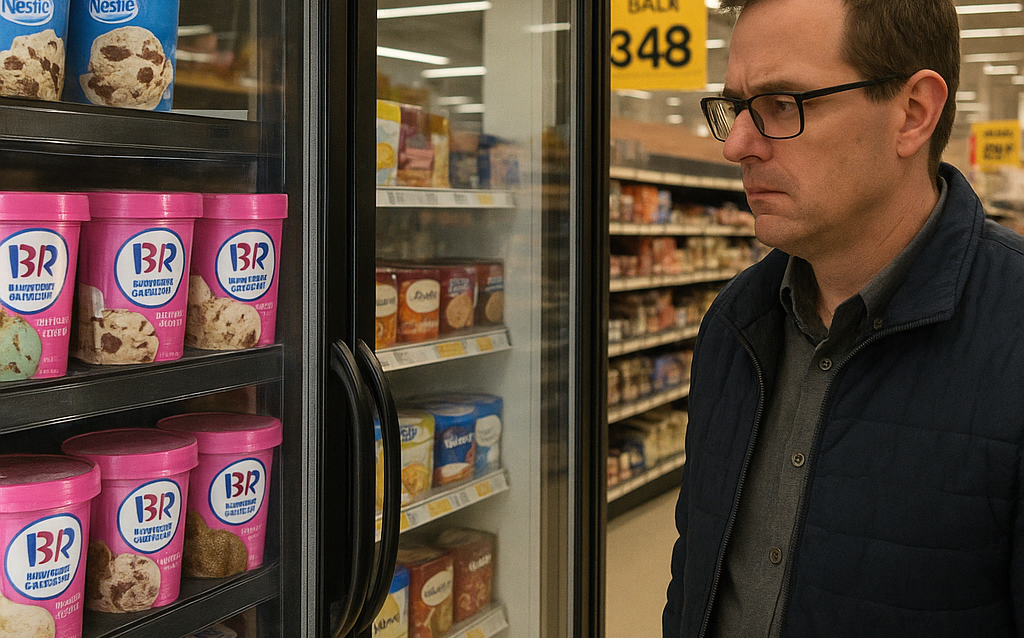
Baskin-Robbins and Nestlé bringing a familiar ice cream brand into Canadian grocery freezers sounds like light business news. But as a mortgage broker, I pay attention to these “small” moves because they often reflect bigger shifts in household spending, inflation pressure, and the mood of the consumer economy—all of which feed into mortgage rates and home prices.
If you’re a homeowner between 30 and 55, you’ve likely felt the budgeting squeeze over the past two years. A new grocery launch won’t change your mortgage payment directly, but it can hint at where consumer demand is heading next. And that matters when you’re shopping for Best Mortgage Rates or deciding whether to renew early or ride out a variable rate.
Grocery launches, inflation, and why the Bank of Canada cares
When a big brand expands into grocery shelves, it’s usually chasing volume. Restaurants and specialty shops can be hit-or-miss in tight times, while grocery is steadier. That’s not a knock on the product—it’s a sign companies want to be where Canadians are spending reliably.
The Bank of Canada doesn’t set rates based on ice cream, obviously. But it does look closely at consumer spending and inflation trends. The Bank’s policy rate is still 5.00% as of its latest standing decision, and it has been clear that the “last mile” of inflation is the hardest. You can track the current rate and updates directly on the Bank of Canada key interest rate page.
Here’s where it connects. Grocery is one of the most visible inflation touchpoints for families. If food prices keep climbing, households pull back elsewhere. If food prices cool, consumers breathe again. Either way, it influences overall inflation readings and how long higher interest rates stick around.
For mortgage borrowers, the difference between “rates coming down soon” and “rates staying higher longer” shows up in renewal offers, qualifying rules, and the fixed-versus-variable debate. People often ask me, “Should I just wait until rates fall?” The challenge is that the economy doesn’t move in a straight line. Consumer brands shifting strategies is one of many clues in that bigger picture.
What this says about household budgets (and homeowner behaviour)
A grocery debut for a known treat brand is also a bet on at-home enjoyment. Canadians are still looking for affordable wins—something that feels like a splurge but doesn’t cost as much as going out. That behaviour lines up with what I’m hearing from clients: fewer big-ticket purchases, more careful planning, and a lot more spreadsheet thinking.
That budgeting mindset has real mortgage consequences. When homeowners tighten spending, they’re often trying to protect cash flow against higher payments at renewal. It’s not just variable-rate borrowers anymore. Plenty of people with 2021 fixed rates are staring down renewals that could be hundreds more per month.
One practical move I’m seeing is homeowners building a cushion using a home equity line of credit, but only if it’s structured carefully and not treated like “free money.” If you’re weighing that option, it helps to understand how a HELOC works, especially the interest-only payment trap and how lenders look at it when you renew.
Another trend: more people are asking about refinancing to extend amortization or consolidate higher-interest debt. That can be smart, but only if the math actually improves your monthly budget after fees. The mortgage world has become less forgiving with stress-test qualifying and tighter lender scrutiny.
Real estate sales: stable headlines, choppy reality
Housing is doing that classic Canadian thing right now: the national story sounds calm, but each city feels wildly different. Some markets are re-accelerating on limited listings, while others remain price-sensitive and negotiation-heavy.
On the sales side, the Canadian Real Estate Association has shown that activity can swing month-to-month as buyers react to rate expectations. CREA’s public reporting is worth checking when you want a temperature check on demand, especially around turning points. Their housing updates and market statistics are available on the CREA housing market stats page.
From my seat, buyer confidence is still fragile. People are willing to shop, but they don’t want surprises. They ask more questions about condo fees, insurance costs, and property tax history. That’s healthy. In a higher-rate world, “the payment” matters more than “the price.”
For homeowners thinking of selling and buying again, the big mistake is focusing only on what your home might sell for. The better question is what it costs to replace your housing. If you’re moving from a low-rate mortgage to a new one, you’re effectively trading cheap debt for expensive debt. Sometimes that trade is worth it. Many times, it isn’t.
Rates, renewals, and choosing fixed vs. variable in 2026
This is where the Baskin-Robbins/Nestlé news becomes more than a fun headline. Consumer companies move when they believe behaviour is changing. If households are watching dollars closely, it reinforces the idea that the economy is still sensitive to borrowing costs—and that sensitivity is part of what eventually allows rates to drift downward.
But homeowners shouldn’t confuse “eventual” with “imminent.” Rate cuts, when they come, don’t always translate into a fast drop in mortgage costs. Fixed mortgage pricing is influenced by bond yields, and those can move ahead of central bank decisions or against them, depending on investor expectations.
If you’re debating a term choice right now, it helps to compare the trade-offs rather than hunt for the perfect prediction. A Fixed Rate mortgage can make sense if you need certainty and a stable budget. Variable can still work for some borrowers, but the tolerance for payment swings has to be real, not theoretical.
Also, renewal strategy matters as much as the rate. Shorter terms can offer flexibility if you think the landscape will improve. Longer terms can reduce stress if you’re already stretched. The “right” answer depends on income stability, debts, kids’ expenses, and whether you expect to move.
One more point that gets missed: even when rates fall, lenders don’t automatically loosen. Qualification and underwriting rules can stay tight if the broader economy looks uncertain. That’s why planning early—sometimes 120 to 180 days before renewal—can open more options.
My take: a freezer aisle expansion is a confidence signal
I don’t think Canadians are suddenly going to buy homes because they can buy brand-name ice cream at the grocery store. But I do see this kind of partnership as a confidence signal from major companies that steady, everyday consumer spending is still there.
If everyday spending holds up, it supports employment. If employment stays solid, homeowners keep paying their mortgages. And if mortgage performance stays strong, lenders remain competitive—even in a higher-rate environment. That competition is what helps you negotiate better renewal pricing and terms.
At the same time, the fact that brands are fighting hard for grocery shelf space tells me families are still value-focused. That suggests the economy isn’t roaring; it’s adjusting. In housing, “adjusting” often means slower price growth, more conditional offers, and a sharper divide between move-in-ready homes and everything else.
For homeowners, that’s not all bad news. A calmer market can be a window to restructure debt, plan renovations realistically, and avoid rushed decisions. The key is using that breathing room wisely.
Conclusion: watch the small signals—and plan your mortgage early
This grocery-store debut is a reminder that the Canadian economy is still pivoting around affordability. Companies are trying to meet consumers where they are, and homeowners are doing the same with their finances. That push-and-pull influences inflation, which influences rates, and rates continue to shape what buyers can pay for homes.
If you’re renewing this year, considering a refinance, or just want a second opinion on your options, it’s worth getting advice before your bank’s renewal letter becomes your default plan. Unrate.ca can help you compare lenders, structure the term that fits your life, and avoid expensive mistakes when the market is changing.
Leave a Reply