

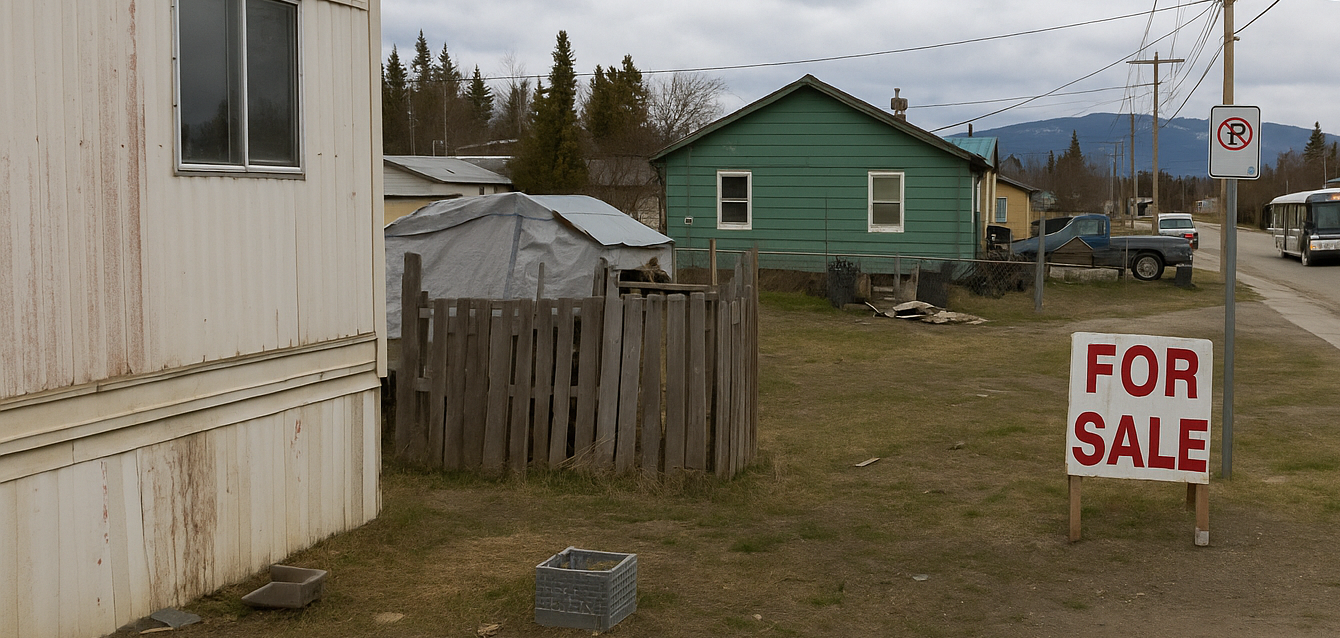
When a headline says poverty is “under 10%,” it can sound like things are improving. But a recent Yukon Anti-Poverty Coalition report argues that the territory’s numbers are being softened by Whitehorse-heavy averages, masking tougher realities in smaller communities. That matters to homeowners and buyers because local income pressure doesn’t stay in a spreadsheet—it shows up in arrears risk, price growth, rental demand, and how lenders view a region’s stability. If you’re tracking the housing economy (or shopping for Best Mortgage Rates), this is a reminder to look past the headline number.
Stats can blur local risk—and housing feels it first
Statistics are useful, but they can also hide what’s happening on the ground. In a place like Yukon, a single dominant market can pull the average in its direction. Whitehorse has more jobs, more services, and typically more housing options than smaller communities. If conditions worsen outside the capital, the territory-wide number may not move much, even if real hardship is increasing in several areas.
From a mortgage perspective, that “blended” picture can lead to surprises. Household financial stress tends to show up first in housing: late payments, deferred maintenance, forced sales, or families doubling up. When income is unstable or the cost of basics rises, the mortgage payment becomes harder to defend—especially for owners who renewed into today’s higher rates.
Across Canada, we’ve already seen how sensitive housing is to rates. The Bank of Canada’s policy rate rose sharply from 2022 to 2023 and has remained elevated compared to the pre-2022 era. Even without getting into politics, the math matters: higher rates increase monthly payments and reduce purchasing power. For reference, the BoC posts the current policy rate and history on its key interest rate page.
In smaller markets, the same rate shock can hit harder. There are often fewer employers, fewer rentals, and fewer “escape hatches” if a household budget breaks. If a homeowner in a remote community needs to sell quickly, the buyer pool is smaller. That can mean longer listing times or a steeper price cut than you’d expect in a large city.
Why poverty trends matter to home prices and sales
Home prices aren’t just about interest rates. They’re also about confidence and capacity. When more households struggle with food costs, transportation, and utilities, fewer can qualify to buy. That softens demand, even if inventory is tight. In the North, where construction costs are high and supply is slow to respond, you can end up with a strange mix: housing feels scarce, yet fewer people can comfortably afford what exists.
Nationally, real estate activity has been choppy, reacting to rate expectations. The Canadian Real Estate Association tracks sales and price trends monthly, and their market snapshots are worth watching on the CREA housing market statistics page. Even if you’re not in Yukon, the same story applies: affordability pressures can cool sales, then a small rate change can re-ignite them.
My own take is that affordability stress creates “two housing markets” inside one region. The first is households with stable income and equity, who can still transact. The second is households living closer to the edge, where one repair or one renewal can trigger a crisis. In Whitehorse, that split may be easier to miss because more jobs and services can keep the market moving. Outside Whitehorse, the split can become a wall.
This is also where the rental market feeds back into ownership. If poverty is deeper in smaller communities, demand for affordable rentals increases. But if there isn’t much rental supply, rents can rise anyway. That makes it harder for would-be buyers to save for a down payment, and it increases the chance that existing owners will rent out rooms or secondary suites just to stay afloat.
What homeowners can do before renewal pressure hits
If you’re a homeowner aged 30 to 55, you’re likely juggling competing priorities: kids, aging parents, career changes, and a mortgage renewal that may land at a higher rate than your last term. The smartest moves are often the boring ones—done early, before stress forces a rushed decision.
Start by stress-testing your payment. Many households can handle a higher rate for a while, but not indefinitely. If your renewal is coming in the next 6 to 18 months, you can model scenarios using a Mortgage Calculator. The goal isn’t to guess the exact rate. It’s to understand your break points: “At what payment do we stop saving?” and “At what payment do we start borrowing?”
If you have equity and your budget is tight, a well-structured refinance can sometimes lower monthly pressure by extending amortization or consolidating higher-interest debt. The key is to be honest about the trade-off: lower monthly costs often mean more interest over time. Still, for many families, cash flow is the difference between stability and constant stress. If you’re weighing options, Refinance information can help you understand what lenders look for and what costs to plan around.
In some cases, access to emergency funds can prevent expensive choices. A roof leak or furnace failure shouldn’t push a household into credit card debt at 20%+. For owners with enough equity and discipline, a home equity line of credit can be a safety valve—used sparingly, paid down aggressively. If that’s on your mind, read up on a HELOC and how it’s priced and approved.
The bigger housing economy lesson: averages don’t pay bills
The Yukon report’s core message—don’t let a capital-city average define the whole territory—has a wider lesson for Canadian housing. National averages can also hide pain. The same interest rate can be manageable in one city and brutal in another, depending on wages, commuting costs, and the mix of housing stock.
It’s also a reminder that housing policy and housing finance are linked. When affordability worsens, pressure builds for more supply, more supports, and faster building timelines. CMHC has been blunt about Canada’s supply gap and publishes research and market data that’s useful for homeowners trying to understand the bigger direction of travel. Their main portal is a good starting point: CMHC.
My perspective, as a broker, is that the best mortgage strategy is local and personal. It depends on your job stability, your equity position, and how resilient your budget is to surprises. If a region’s prosperity is uneven—like the coalition suggests in Yukon—then even “good” headline numbers don’t eliminate household-level risk.
That’s why I encourage homeowners to treat renewals as planning events, not paperwork. Talk through term length, payment flexibility, and whether your lender will still be competitive at renewal time. It’s not just about the lowest rate; it’s about avoiding a situation where you’re forced to make a major decision under pressure.
The takeaway from this Yukon story is simple: when the average looks fine, look closer. Uneven prosperity can change housing demand, resale liquidity, and lender comfort faster than people expect. If you’re approaching renewal, thinking about buying, or just want a second set of eyes on your options, Unrate can help you line up a mortgage plan that fits your real budget—not the average one.
Leave a Reply