

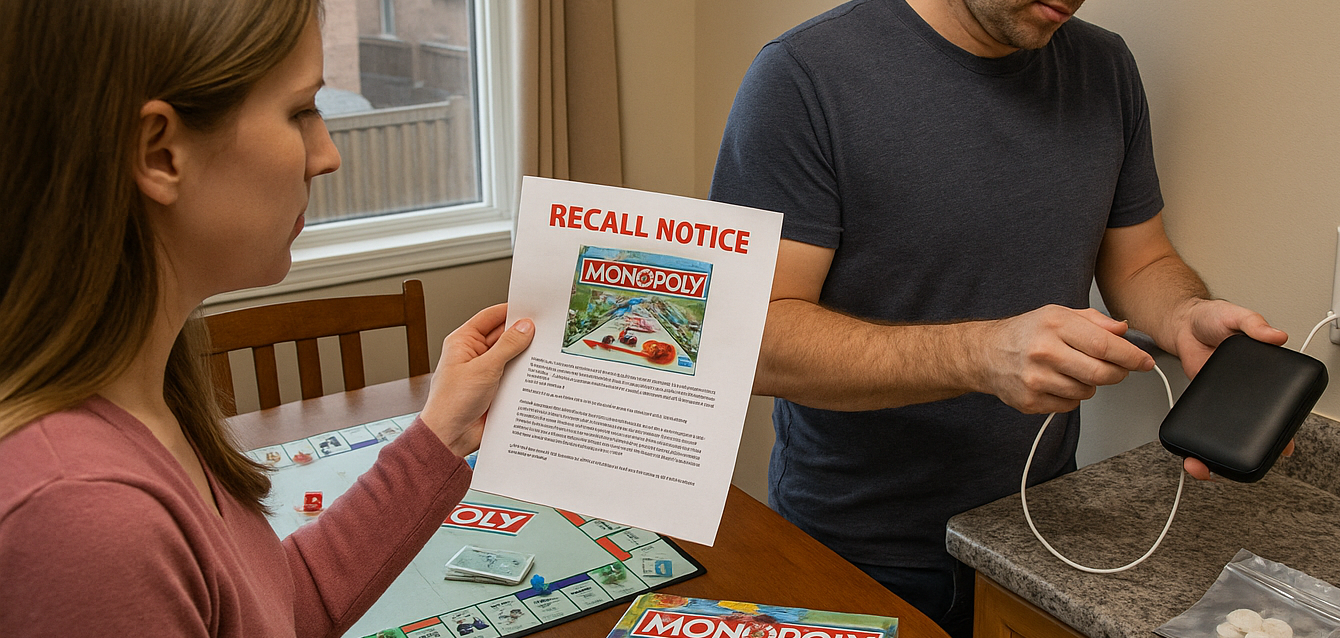
Product recalls don’t sound like real estate news, but they can still hit your household budget and your peace of mind. This week’s recall notices in Ontario and across Canada—ranging from a popular board game sold online to cannabis edibles and power banks—are the kind of “small” surprises that remind me how quickly everyday costs can change. And when costs change, homeowners rethink big decisions like renovations, refinancing, and even whether to list their home.
As a mortgage broker, I watch these stories because they’re a pulse check on consumer spending and confidence. When people feel uneasy, they delay purchases and hold cash. That behaviour shows up in housing activity and, eventually, pricing. If you’re tracking affordability and shopping for Best Mortgage Rates, it’s worth paying attention to what’s happening outside the housing pages.
Recalls feel small—until they change how families spend
Let’s be honest: a recall for a board game or a power bank won’t move Toronto prices tomorrow. But it does highlight something real—households are stretched, and they’re tired of “one more thing” going wrong. When families need to replace items unexpectedly, it eats into the same pool of money that might have gone toward extra mortgage payments, a new furnace, or a weekend of open houses in a different neighbourhood.
Over the last two years, inflation has cooled from its peak, but Canadians are still sensitive to surprise expenses. The Bank of Canada’s policy rate has been the biggest factor shaping that mood. You can see the current rate and context directly from the Bank of Canada’s key interest rate page. Even when the rate holds steady, borrowers still feel the cumulative impact of higher payments, especially anyone with a variable rate or a renewal coming up.
Recalls also feed a general sense of caution. If you’re already watching grocery prices, insurance renewals, and property taxes, you don’t have much patience left for product issues—especially ones tied to charging devices or consumables. Consumer caution doesn’t just reduce discretionary spending; it can slow down renovation plans, which matters because renovations often precede listings or help justify higher asking prices.
From my side of the desk, I see it in the questions people ask. Instead of “Can we afford the upgrade?” I’m hearing “How much buffer do we need?” That shift is subtle, but it’s important.
Housing markets run on confidence, not just rates
Canadian housing is still heavily rate-driven, but confidence is the fuel that makes people act. Even if your income is steady, you’re less likely to buy or sell when the world feels unpredictable. Product recalls are not the cause of that uncertainty, but they add to it—another reminder that systems don’t always work the way we expect.
Housing activity is easy to track because the numbers are public and updated often. The Canadian Real Estate Association publishes monthly stats on sales and prices, and it’s one of the cleanest ways to see buyer behaviour shift in real time. If you like following the market, CREA’s housing market statistics are worth a look.
When confidence dips, you usually see fewer discretionary moves. That means fewer “move-up” buyers and fewer sellers who don’t have to sell. The market can still function, but it gets thinner. In thin markets, pricing becomes jumpier. One home sells over asking and the next sits for three weeks. That whiplash is hard on buyers and exhausting for sellers.
For homeowners aged 30 to 55, this matters because you’re often in the most active stage of housing life. You might be thinking about a bigger home, a different school zone, or a layout that works better for hybrid work. If confidence is shaky, you may delay that move, and that can reduce listings and keep supply tight.
CMHC has been clear that Canada’s supply challenge is long-term. Their research and reports are a good reminder that affordability isn’t just about interest rates—it’s also about how quickly we can add homes. CMHC’s housing market data and research is where I send clients who want the bigger picture.
What this means for renewals, refinancing, and planning ahead
When people feel uncertainty, they do one of two things: lock in stability or build a cash cushion. In mortgage terms, that usually means choosing predictable payments or accessing equity in a controlled way. If you’re renewing soon, it’s a good time to run the numbers and decide what “sleep-at-night” looks like for your household.
One practical step is to revisit your payment range using a tool that forces you to see the full monthly cost, not just the headline rate. I like when homeowners use a Mortgage Calculator before they start rate shopping. It helps you test scenarios: higher rates, longer amortizations, or the impact of lump-sum payments.
If you’re carrying other debt—like a line of credit, car loan, or high-interest cards—uncertainty is often the moment people consider consolidating. That can be smart, but only when the plan is disciplined and the term fits your goals. In those cases, a structured Refinance can reduce monthly pressure, especially if your household budget has been squeezed by higher everyday costs.
That said, I’m careful with this advice: refinancing is not “free money.” It’s your home equity, and it should be treated like a resource, not a routine fix. If you’re refinancing to handle short-term surprises, you also need a longer-term plan to rebuild savings. Otherwise, the next surprise—whether it’s a recall replacement, a special assessment, or a roof leak—lands even harder.
There’s also a behavioural angle here. When headlines make people anxious, they’re more likely to rush decisions. In mortgages, rushing is expensive. It can lead to the wrong term, the wrong lender, or a penalty you didn’t see coming. If you’re thinking about selling, buying, or restructuring debt, slow the process down enough to compare options properly.
How I’d read this news as a homeowner in 2026
If I were looking at these recall notices as a homeowner, I’d treat them like a reminder to tighten the basics. Check what you’ve bought recently, register products when possible, and keep receipts where you can find them. It’s boring, but it prevents headaches. The same “boring wins” mindset applies to mortgage planning.
I’d also use the story as a nudge to review my emergency fund target. Homeowners often underestimate how many things can hit at once—an appliance replacement, an insurance deductible, and a higher renewal payment. Even a couple thousand dollars set aside can stop you from making a rushed mortgage decision.
Finally, I’d connect the dots to the broader housing economy. When Canadians feel cautious, real estate tends to cool at the edges first: fewer bidding wars, more conditional offers, and more attention to inspection results. That doesn’t mean prices collapse; it means buyers get picky and sellers need to be realistic. If you’re planning a move in the next 6–18 months, that shift in tone can matter as much as a quarter-point rate change.
And if you’re a homeowner who’s simply trying to keep things steady, the goal is the same: protect cash flow. Cash flow is what keeps you in control, even when the news cycle gets noisy.
None of this is meant to alarm you. It’s the opposite. Recalls are part of modern consumer life, and most are handled quickly. But they’re also a timely reminder that “unexpected” is now a normal category in household budgeting—and mortgage planning should reflect that reality.
If you’re renewing, buying, or considering a restructure, Unrate.ca can help you compare options and build a plan that fits your risk comfort and timeline. A steady mortgage strategy is still one of the best ways to keep your home life calm, even when the headlines aren’t.
Leave a Reply