

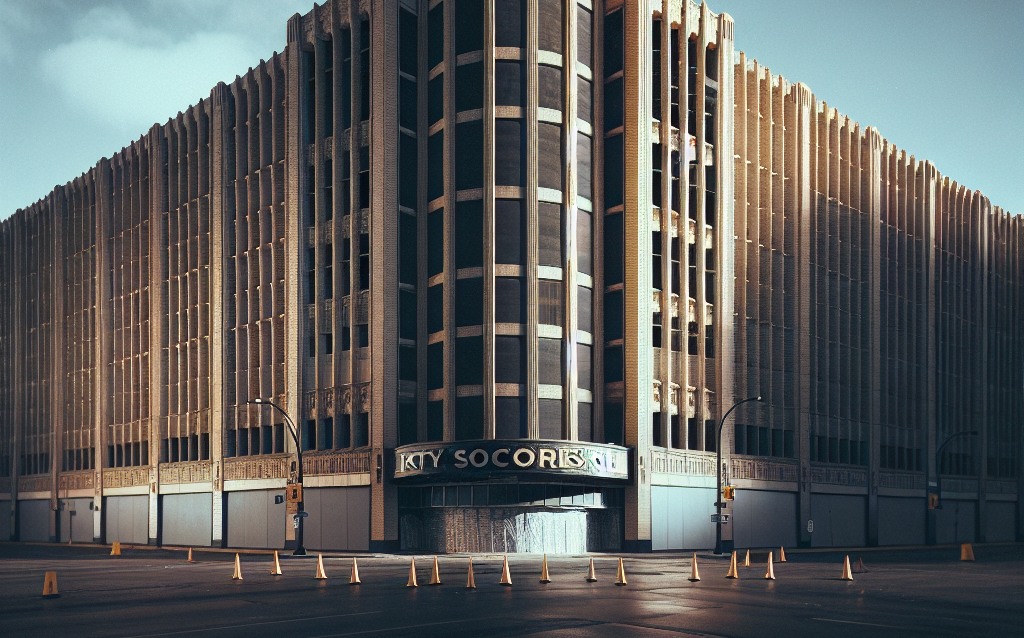
Winnipeg just witnessed the end of a retail era. The final curtain has closed on Hudson’s Bay stores in the city, marking the end of a legacy that helped define not only the city, but a large swath of Canada’s commercial landscape. While the brand itself fades from downtown storefronts, it leaves behind a different kind of memory — one written in bricks, mortgages, and the rising value of urban land. And for Canadian homeowners, that legacy still speaks volumes about where real estate may be headed.
From Trading Post to Property Powerhouse
Long before suburban sprawl and MLS listings, cities like Winnipeg grew around simple but powerful hubs of commerce. Hudson’s Bay wasn’t just retail — it was infrastructure. When the iconic downtown store opened in 1926, it wasn’t just selling wool coats and fine china; it was helping shape economic gravity in the Prairies.
The closure of its downtown location in June may feel like a retail footnote, but here’s the thing: the land it leaves behind still matters. And not just sentimentally. It highlights how older commercial real estate — especially in city cores — is now being reassessed for higher-purpose uses, including residential redevelopment. That’s something every homeowner (or aspiring one) should keep an eye on.
RBC’s June 2024 market outlook noted that urban renewal projects are gaining traction as municipalities try to balance housing demand with underutilized space. Turning retired retail giants into condos or mixed-use buildings isn’t just good urban planning — it may become a necessity.
Changing Urban Real Estate Values
Commercial spaces in core downtown areas across Canada are being re-evaluated, partially because of what Hudson’s Bay leaves behind. Winnipeg’s Bay building is one of the largest parcels of underused urban space in Western Canada. If repurposed for housing, it could set a precedent for other Canadian downtowns grappling with stagnant commercial corridors and skyrocketing real estate needs.
Homeowners within city centres should be tuned in. Why? Because redevelopment often lifts surrounding home values. Look at Montreal’s Peel neighbourhood or developments around Toronto’s East Harbour. According to the Canadian Real Estate Association (CREA), urban parcels that saw zoning for mixed-use within 3 to 5 years witnessed property value increases of 12% on average — regardless of wider market trends.
So while interest rates and inflation dominate headlines, the transformation of our cities — like downtown Winnipeg — could quietly influence where prices are headed next. This is especially relevant if you’re evaluating whether to refinance or invest in a second property.
If you’re currently exploring [refinancing](https://unrate.ca/mortgages/refinance/) and you live in a maturing neighbourhood, it may be worth speaking with a mortgage advisor about future equity opportunities if your area becomes the focus of redevelopment efforts.
Homebuyer Strategy in a Post-Bay Economy
What Hudson’s Bay leaves behind is potential — not loss. We have an inventory problem nationwide: too few homes, high immigration targets, and slow construction pipelines. Older urban properties could be a short-term solution, and cities like Winnipeg are case studies in how this might play out.
As of May 2024, Canada continued to face a housing deficit in excess of 3.5 million units, according to CMHC. What that means is, we can’t always build on untouched land. We’ll need to repurpose what we’ve already built. This change from commercial to residential could also alter property taxes, mortgage structures, and local zoning laws as cities adjust to new density targets.
Homeowners should keep tabs on what’s happening in their local BIA (Business Improvement Area) and city zoning meetings. If disused retail properties are being converted into mid- or high-density housing, it could influence your property value, traffic flow, and even school district catchments. All of that matters when determining mortgage affordability and plans for upgrading or downsizing.
Thinking long term? You may want to investigate a [construction mortgage](https://unrate.ca/mortgages/construction-mortgage/) if you’re looking to get involved in infill or zoning-friendly builds within your city. It’s a niche route, but one that will matter more as urban land becomes harder to find undeveloped.
Legacy, Not Loss
The loss of a major player like Hudson’s Bay might stir nostalgia, but it shouldn’t overshadow the opportunity it leaves in its wake. Urban land is finite, especially in heritage spaces that governments are often keen to preserve and revitalize. Reconstruction efforts — such as those likely coming to the empty Bay site in Winnipeg — often receive planning incentives, which can drive local investment. That spells long-term gains for homeowners nearby.
While rates and home prices remain in flux, look beyond headlines. Watch the evolution of land use in your city. If your neighbourhood is ageing, that might not be a risk — it could be the foundation of value growth.
We’re entering a new era of city planning here in Canada. Residential zones are expanding not by land, but by reimagining what already exists. Hudson’s Bay may be gone, but its impact is not. And what comes next may be the opportunity you’ve been waiting for.
If you’re curious how urban changes might affect your property’s future, or if it’s the right time to pursue a [reverse mortgage](https://unrate.ca/mortgages/reverse-mortgages/) or equity-based product, give us a call. At Unrate, we track more than just numbers — we help you read between the lines.
Leave a Reply