

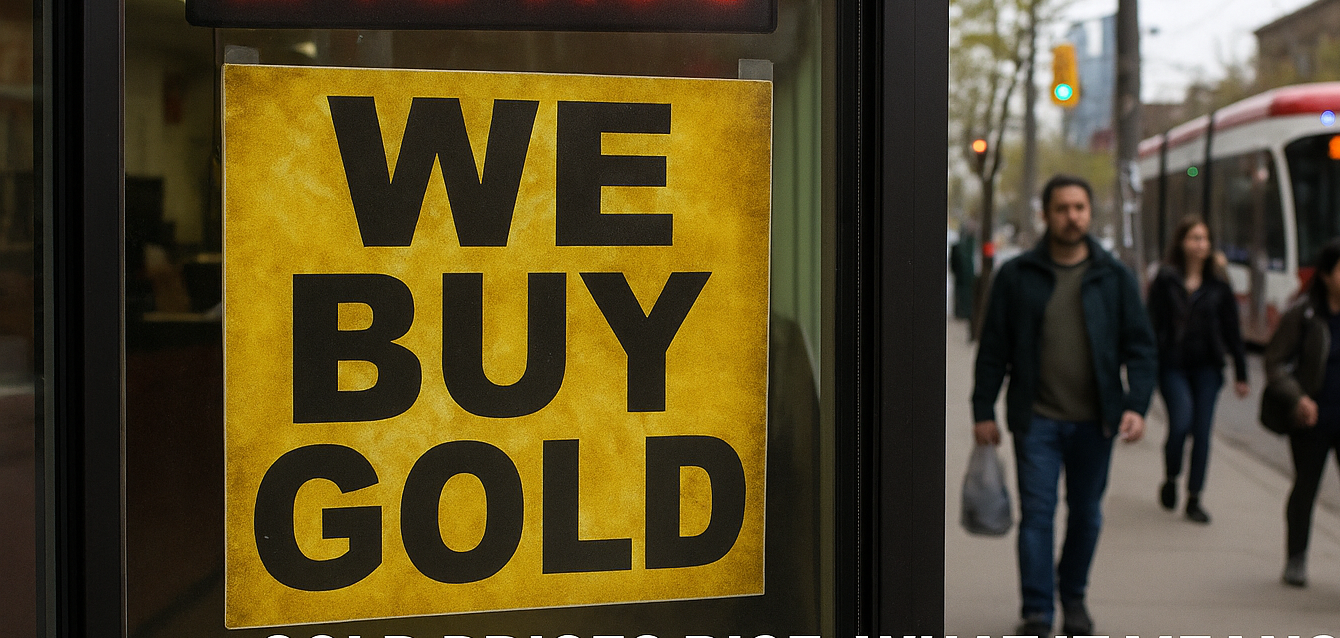
Gold futures are flashing a new “accumulation” signal in market chatter this week, suggesting big investors may be quietly buying again. That might sound far from your mortgage renewal, but it often ties back to the same thing: how confident markets feel about growth, inflation, and where interest rates are headed. For Canadian homeowners, those expectations can show up in bond yields and, eventually, mortgage pricing. If you’re watching payment changes or a renewal date, it’s worth keeping an eye on Best Mortgage Rates and what’s moving them.
Why gold matters when you have a mortgage
Gold doesn’t set mortgage rates directly, but it often reflects investor mood. When money flows into gold, it can hint at caution—about inflation, recession risk, or geopolitical stress. In those moments, investors may also buy safer government bonds. Bond buying can push yields down, and yields are a major ingredient in fixed mortgage pricing.
That relationship isn’t perfect, and it doesn’t work overnight. But it’s a useful “weather vane.” If gold is being accumulated while other markets look shaky, it can suggest investors are preparing for slower growth ahead. Slower growth is usually associated with easing inflation pressure, which can eventually support lower interest rates.
In Canada, fixed mortgage rates tend to track Government of Canada bond yields more closely than they track the Bank of Canada’s overnight rate. Variable rates, on the other hand, move mainly with the policy rate. So when gold signals caution and bonds rally, it’s often fixed-rate shoppers who see the first ripple.
The Bank of Canada’s inflation fight still drives the bus
Even if gold traders are positioning for “what’s next,” the current rate environment is still shaped by the Bank of Canada’s inflation mandate. The BoC has been clear that it wants inflation back near 2% and expects it to stay there sustainably before it gets too comfortable.
We’ve already seen inflation cool a lot from the 2022 peak. But it hasn’t been a straight line, and the BoC has to watch not just headline CPI but the “stickier” parts of inflation too. You can track the BoC’s latest thinking directly in its policy rate announcements, which often move markets the same day.
For homeowners, the practical takeaway is simple: gold can hint at where investors think we’re going, but the BoC decides how quickly we get there. If the economy slows and inflation continues to ease, the path of rates can trend downward. If inflation heats up again, the floor under rates may stay higher for longer.
This is why renewal planning matters. Waiting for the “perfect” rate can backfire, especially if your budget is tight. A good strategy is to compare options early, stress-test your payment, and decide what risk you can live with.
Home prices and sales: rate expectations show up fast
Canadian housing is extremely sensitive to rate expectations. When buyers believe rates have peaked, activity often picks up before actual cuts arrive. When people fear rates will rise again, buyers pause, listings sit longer, and price growth can cool quickly.
National sales numbers tend to reflect that push and pull. The Canadian Real Estate Association releases monthly updates on sales and benchmark pricing, and their data is one of the quickest reads on demand. If you want the latest trendline, CREA’s housing market statistics are worth checking when headlines feel conflicting.
On the supply side, Canada still has a structural shortage, especially in major job markets. CMHC has been blunt that we need significantly more homes built to restore affordability. That longer-term shortage can keep a floor under prices, even when rates bite in the short term. CMHC’s research and reporting is a solid reference point, including its housing market data and research.
So where does gold fit into this? If gold’s “accumulation” theme is right and markets are bracing for softer growth, that could cool buyer urgency. But if it also pulls bond yields down, cheaper fixed-rate financing can bring buyers back. In real life, we often see these forces collide—confidence wobbles, but lower rates re-ignite demand.
What to do if you’re renewing, refinancing, or buying
Most homeowners I speak with aren’t trying to trade gold. They’re trying to manage cash flow. And the biggest issue right now is the payment shock many households feel at renewal, especially if they took a low rate in 2020 or 2021.
If your renewal is within the next 6 to 12 months, start modelling scenarios today. Even a small difference in rate can change your monthly budget by hundreds of dollars, depending on your balance and amortization. A quick run through a Mortgage Calculator can help you see what’s realistic before you negotiate with your lender.
Choosing between fixed and variable is still a real debate. Fixed rates offer payment stability, which is helpful if your budget is already stretched. Variable rates can pay off if policy rates decline faster than expected, but they require more tolerance for uncertainty. If you’re leaning toward predictability, it can help to review how a Fixed Rate mortgage typically behaves versus what you’d experience on a variable.
For homeowners carrying other debt—like high-interest credit cards, car loans, or unsecured lines—consolidation can sometimes improve monthly cash flow. But it has to be done carefully, because stretching debt over a longer period can increase total interest. If the goal is to reduce pressure and create breathing room, exploring a Refinance can be a practical conversation, especially when renewal is approaching.
And if you’re shopping for a purchase, don’t just focus on today’s rate. Look at your full costs: property tax, heating, condo fees, and renewal risk. A home that feels affordable at this moment may not feel affordable at the next renewal if rates remain higher than the pre-pandemic era. That’s the part many buyers overlook when they only compare monthly payments.
Gold’s signal won’t tell you exactly where your mortgage rate will be next month. But it does underline that markets are still nervous and still adjusting to a different inflation-and-rate world. When investors start positioning defensively, it often means volatility is not done with us yet.
Conclusion: watch the signals, but plan for your household
Gold futures hinting at an accumulation phase is one more sign that investors are thinking hard about the next stage of the cycle—slower growth, easing inflation, or both. For Canadian homeowners, the important link is how those expectations influence bond yields and fixed mortgage pricing, while the Bank of Canada continues to steer the overnight rate that drives variables.
If you’re renewing soon, considering a purchase, or simply trying to stabilize your monthly budget, the best move is to run the numbers and compare real options. Unrate can help you sort through rate types, terms, and lender rules so your mortgage fits your life—not just the headlines.
Leave a Reply