

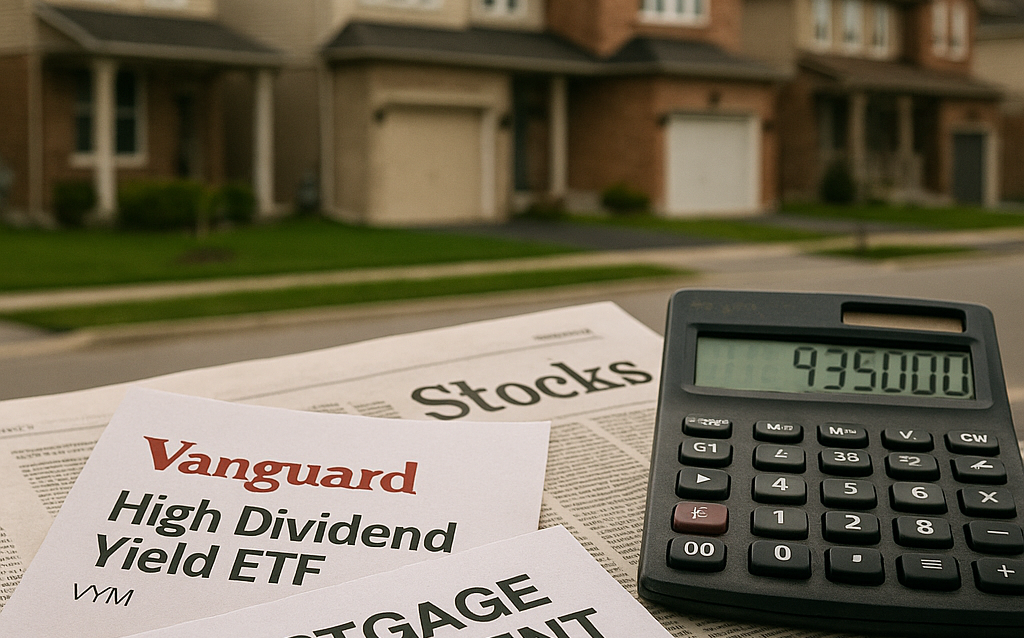
Dividend investing is back in the headlines, and one fund in particular is getting attention: Vanguard’s High Dividend Yield ETF (VYM). On the surface, that sounds like stock-market news. But for Canadian homeowners, it connects to something more personal—how you manage cash flow, renewal risk, and big financial choices when interest rates are still doing most of the heavy lifting in the economy. If you’re trying to make smart moves in 2026, it’s worth looking at how “blue chip dividends” fits (or doesn’t) beside your mortgage decisions and your home equity plan.
In this post, I’ll break down why dividend-focused investing is trending again, what it signals about investor mood, and how that mood overlaps with Canada’s housing market. I’ll also share a few practical ways homeowners can think about dividends versus debt—without turning your mortgage into a DIY investing experiment. If you want a starting point on the lending side, you can always compare options through Best Mortgage Rates as you read.
Why dividend talk is showing up in a mortgage conversation
When a dividend ETF makes news, it’s usually because investors are craving two things: steadier companies and cash distributions. That tends to happen when people feel uncertain about growth, rates, or the economy’s next chapter. In other words, dividend chatter is often a confidence thermometer.
For homeowners, that same uncertainty shows up at renewal time. Many households are still adjusting to payments that jumped after the Bank of Canada’s rapid tightening cycle. Even with cuts eventually arriving, the “easy money” era isn’t the baseline anymore. It’s a different planning environment.
VYM is popular because it holds a broad mix of established U.S. companies that pay dividends and it does so with low fund fees. That combination—diversification plus low cost—appeals to people who want less drama in their portfolios. The mortgage parallel is obvious: borrowers also want predictable, manageable payments and fewer surprises.
There’s a trap here, though. I’ve heard homeowners say, “If dividend yields are X%, should I invest instead of paying down my mortgage?” That’s a real question, but it’s not a simple one. A dividend yield is not a guaranteed return, and it’s definitely not the same as a risk-free interest savings from paying down principal.
Mortgage interest is certain. Market returns aren’t. Even “blue chip” stocks can drop sharply in a downturn, and dividends can be cut. A mortgage payment doesn’t care what the S&P 500 did this quarter.
Rates still set the tone for housing and household budgets
In Canada, interest rates aren’t just a Bay Street story. They’re a kitchen-table story. The Bank of Canada’s policy rate influences variable mortgages, HELOC pricing, and the general direction of fixed rates through bond markets. That flow-through is why rate headlines often lead the nightly news.
If you want the official source, the Bank of Canada posts its policy rate decisions and explanations on its site, and it’s worth bookmarking. Here’s the central reference point for the current policy rate and related information: Bank of Canada key interest rate.
When rates rise quickly, affordability falls. That tends to cool demand and can slow resale activity. When rates stabilize or drop, buyers usually re-enter—but not all at once. In my experience, people need time to trust that lower payments will stick.
CREA’s market data has shown how sensitive sales are to rate expectations, especially in the most expensive regions. If you follow the trend lines over the past couple of years, you’ll notice a pattern: rate optimism brings activity back, while rate fear makes buyers pause. You can review the national numbers directly through CREA’s housing market statistics.
All of this matters when you’re deciding how much liquidity to keep, whether to prepay, and whether to lock into a fixed term or take a variable. The “right” answer depends on your income stability, renewal timeline, and risk tolerance—not just today’s headline rates.
And that’s where the dividend ETF story becomes relevant again. When investors shift toward dividends, it often signals they want smoother income and less volatility. Homeowners tend to want the same thing in their housing budget, especially if childcare costs, groceries, and insurance are already squeezing monthly cash flow.
Dividends vs. mortgage paydown: a practical way to think about it
Let’s keep this grounded. If you have extra cash each month, you basically have three broad choices: pay down debt faster, invest it, or keep it accessible as a buffer. The dividend ETF angle falls into “invest it.”
Here’s the simplest comparison I use with clients. Paying down your mortgage gives you a return equal to your mortgage rate, after tax, with no market risk. Investing in dividend stocks might produce income and growth, but it comes with price swings, currency exposure (if it’s U.S.-focused), and the risk that payouts change.
That doesn’t mean investing is wrong. It means the sequence matters. If you’re six months away from renewal and worried about qualifying or cash flow, paying down high-interest debt or shoring up savings is often the more boring—but safer—move.
If your mortgage is stable, you have an emergency fund, and your retirement contributions are on track, then investing can make sense. But I’d still be cautious about treating dividends like a substitute for employment income. They’re a tool, not a paycheck you can count on.
Also, many Canadians forget the currency angle. If you invest in U.S. dividend stocks and the Canadian dollar rises, your returns in CAD can shrink even if the stocks did fine in USD. That’s not a deal-breaker, but it’s part of the real-world math.
From a mortgage planning perspective, the more immediate lever is your interest rate structure. If you’re weighing certainty versus flexibility, it helps to understand the pros and cons of a Fixed Rate mortgage—especially if you’re trying to keep your household budget steady while you also invest.
Home equity strategies: investing headlines can tempt the wrong move
When markets talk about “income” and “yield,” homeowners sometimes look at their home equity as investable fuel. That usually means borrowing against the home to invest. It can be done, but it’s not something to take lightly.
A home equity line of credit can offer flexibility, but it’s typically variable-rate and interest-only payments can hide the true cost. If rates rise, payments rise. If markets fall, you can end up with debt and losses at the same time. If you’re exploring the mechanics, here’s a plain-language overview of a HELOC.
I’m not anti-investing. I’m pro-alignment. Borrowing to invest tends to work best for households with strong cash flow, a long time horizon, and the emotional ability to ignore market drops. Many people overestimate that last part.
Another common situation right now is homeowners considering a refinance to consolidate debt or reduce monthly pressure. That’s not “investment” in the traditional sense, but it can be a financial reset. If you’re carrying high-interest consumer debt, a mortgage refinance can lower the rate and simplify payments, though it may extend amortization and increase total interest over time. If that’s your situation, read up on Refinance options before you commit.
One more note: CMHC has consistently highlighted affordability constraints and supply challenges in its housing research. Those fundamentals matter because they shape home price resilience. If prices are supported by chronic supply shortages, homeowners may feel more confident using equity. But confidence isn’t a strategy on its own, and leverage cuts both ways. CMHC’s housing information is a useful reference point: CMHC housing market data and research.
My view is that most households should treat home equity like a stability tool first and an investment tool second. The home is already a leveraged asset for most Canadians. Adding more leverage on top of that deserves a clear plan and a stress test.
If you’re tempted by dividend yields because your mortgage rate feels high, that’s a signal to revisit your mortgage structure, not necessarily to chase yield. Sometimes the best “return” is simply reducing risk.
Conclusion: use the dividend trend as a reminder to tighten your plan
The buzz around dividend-heavy ETFs like VYM is really a story about stability. Investors are looking for established businesses, diversified exposure, and lower costs. Homeowners are looking for the same things in their monthly budget: predictability, resilience, and fewer nasty surprises at renewal.
The key takeaway is this: don’t let investing headlines push you into a mortgage decision you’ll regret. If you’re unsure whether to prioritize prepayments, refinancing, or a change in rate type, it helps to run the numbers and stress-test your budget under different rate scenarios. If you want a second set of eyes, Unrate.ca can help you compare options and choose a path that fits your household—not the market mood.
Leave a Reply